
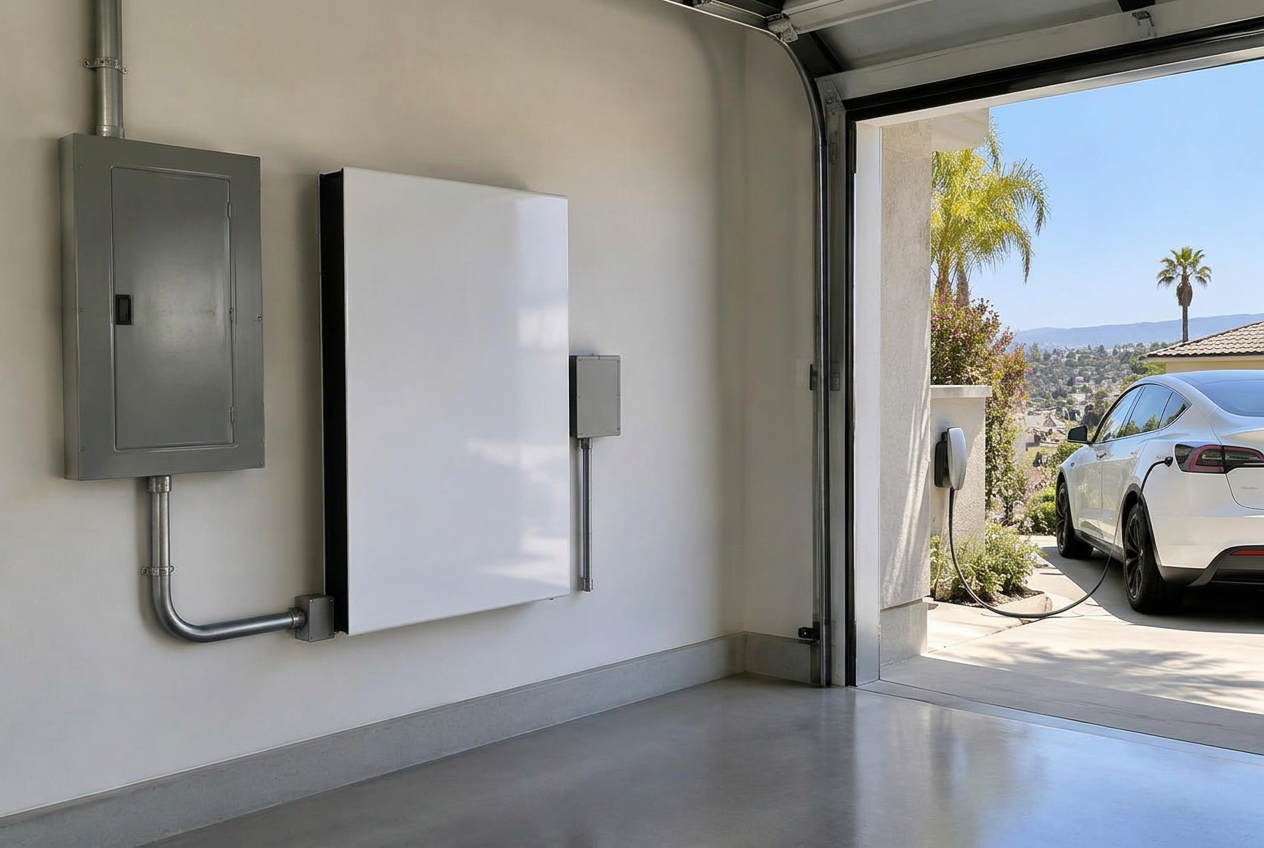
Tesla Powerwall Battery Storage
Meet Tesla Powerwall. Smarter Energy for Your Home.
Store solar energy, manage electricity usage, and prepare for outages with Tesla Powerwall battery storage.
Solar panels generate electricity during daylight hours. But what happens when the sun goes down? Whether you already have solar or are planning a new installation, SunSoCal can help you evaluate Tesla Powerwall options for your home.
What is Tesla Powerwall?
Your Home's Energy Storage System.
Depending on the configuration, it can help homeowners:
- Use more of their own solar energy
- Shift electricity consumption away from certain expensive utility periods
- Maintain power to selected or appropriately supported household loads during outages
- Monitor energy production and consumption
- Manage battery operation through compatible software
Tesla Powerwall 3
Advanced Battery Storage Designed for Modern Homes.
- Nominal energy capacity
- Approximately 13.5 kWh
- Solar integration
- Integrated solar inverter capabilities
- Backup power
- Available when properly configured
- Energy storage
- Stores solar energy for later use
- Monitoring
- Home energy monitoring included
- Expansion
- Modular expansion options, subject to compatibility and equipment limits
- Placement
- Outdoor and indoor installation possibilities, subject to Tesla specifications and local requirements
Specifications are approximate and subject to verification against Tesla's current official documentation. Power output, operating temperature, warranty, and configuration limits are confirmed during system design.
How Powerwall works
Generate. Store. Use.
During the Day
During the Evening
During a Power Outage
When the Grid Returns
Why batteries matter in California
California Solar Has Changed. Energy Storage Matters More Than Ever.
California's electricity billing rules have evolved. Under the Net Billing Tariff used by participating investor-owned utilities, compensation for exported solar energy can differ substantially from the retail price of electricity purchased from the grid.
As a result, storing solar energy for later use may offer meaningful advantages for some households. Tesla Powerwall can help homeowners use more solar energy during evening hours rather than exporting all excess daytime production.
The actual financial benefit depends on:
- Utility provider
- Applicable billing tariff
- Electricity consumption
- Solar production
- Battery size
- Battery operating settings
- Installation costs
- Financing terms
We never promise guaranteed savings — we show you the factors and the math for your home.
Already have solar? Add Powerwall.
You May Not Need New Solar Panels to Add Battery Storage.
SunSoCal can review:
- Your current inverter
- Existing solar production
- Electrical infrastructure
- Utility billing arrangement
- Battery placement options
- Backup power goals
- Equipment compatibility
Powerwall for new solar installations
Design Your Solar and Battery System Together.
How many Powerwalls do I need?
One Home. Different Energy Needs.
- Average daily electricity consumption
- Evening and overnight electricity usage
- Air-conditioning demand
- Electric vehicle charging
- Essential backup loads
- Desired backup duration
- Solar system production
- Available installation space
- Budget
An illustrative example
What does 13.5 kWh actually mean?
A single Powerwall 3 provides approximately 13.5 kWh of nominal stored energy. The amount of time that energy can power a home depends on the home's electricity demand.
For example, a sustained 1 kW load would theoretically consume 12 kWh over 12 hours — before accounting for system losses, reserve settings, and other operating considerations.
This is an illustrative example, not a backup-duration guarantee.
Backup power
Be Better Prepared When the Grid Goes Down.
Whole-home backup may be possible with an appropriately designed system, but it is not guaranteed by installing a single battery.
Explore Home Backup OptionsSee How Your Home Uses Energy.
Tesla's energy monitoring features can help compatible system owners understand solar production, home electricity consumption, battery charge level, grid electricity usage, and energy storage activity — all from a compatible app.
Free assessment
Find the Right Battery Configuration for Your Home.
- Compatibility review for existing solar systems
- Backup power and bill-management sizing
- Clear explanation of equipment and costs
- No pressure and no obligation
Need more solar production too? Explore Solar Add-Ons.
Common questions
Tesla Powerwall FAQs
Ready to Add Tesla Powerwall to Your Home?
Whether you're expanding an existing solar system or installing solar for the first time, SunSoCal can help you explore the right battery configuration.